The method of paying toll fees varies broadly by toll operators. Historically, a user has stopped and paid the appropriate toll fees at a toll booth or gate. But to increase safety, reduce cost and congestion, toll roads have implemented electronic mechanisms for billing and receiving toll payments automatically.
For private drivers, electronic transponders mounted in a vehicle allow for easy billing; the toll system registers the vehicle’s passage, and the driver is billed accordingly.
However, all-electronic tolling introduces challenges for fleet operators like rental car companies, short-term lessors and rideshare companies because automated tolling assumes the vehicle owner is driving the car and using the toll road. Therefore, the vehicle owner must rebill their customer in turn.
Customer rebilling gets even more challenging as there are delays in getting the list of toll transactions. The delays are due to any number of reasons from improperly mounted transponders to data sharing challenges among the 130 toll operators in the US.
Potential customers polled say that up to 20% of toll fees are lost due to the delays and credit card related issues like declines, disputes, etc.
Tollspot solves these issues real time tolling and charging the customer for tolls before the customer leaves.

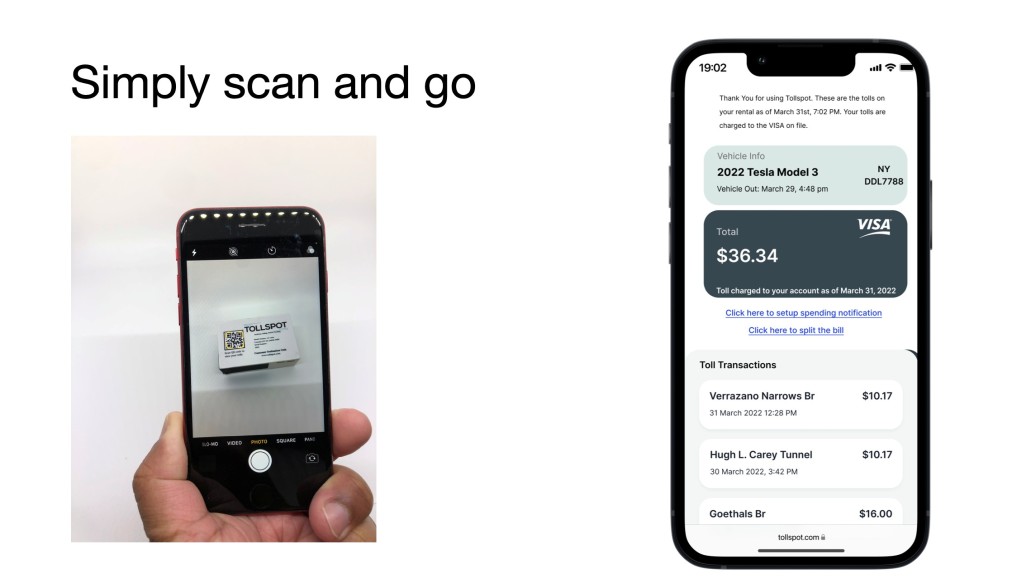
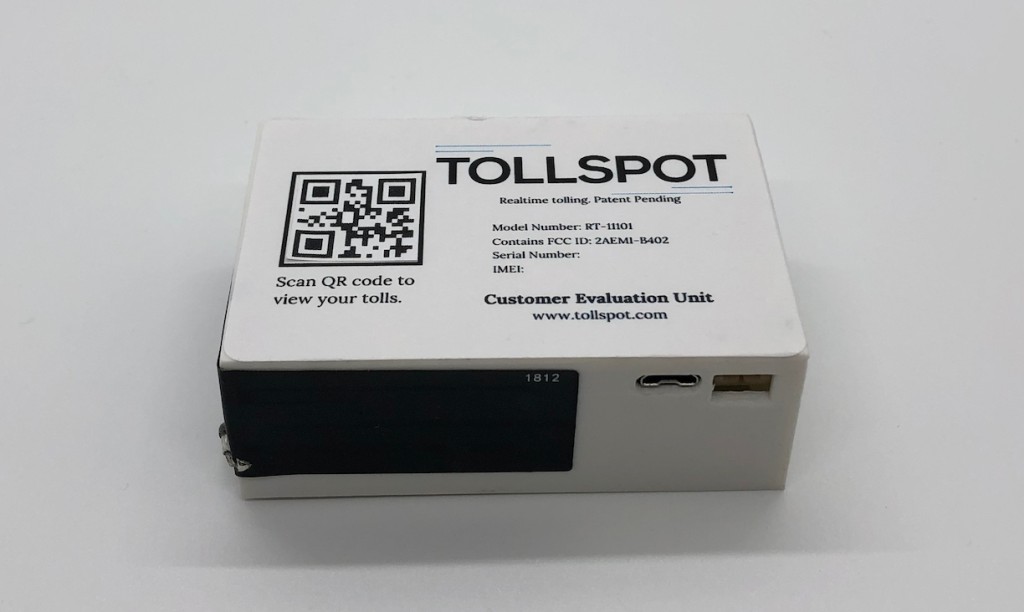 Prototype of the TollSpot hardware device.